Introduction
A well-structured literature review is one of the most important sections of a PhD thesis or dissertation. It demonstrates a researcher’s understanding of previous studies, identifies research gaps, and establishes the academic foundation for the proposed research. Many doctoral scholars struggle with organizing journal articles, critically analyzing research findings, and maintaining a logical flow throughout the review process. This comprehensive Literature review writing guide is designed to help PhD students understand the complete process of writing an effective literature review.
Understanding How to write a literature review is essential for producing high-quality academic work. A strong literature review not only improves research credibility but also demonstrates analytical thinking, subject expertise, and academic writing skills. Whether you are beginning your doctoral journey or refining your thesis chapter, learning How to do a lit review correctly can significantly strengthen your research quality.
This article provides a detailed explanation of the Step by step literature review process, including practical strategies, structure, examples, and common mistakes to avoid. By following this guide, PhD students can confidently create a literature review that supports their research objectives and contributes valuable insights to their academic field.
What is a Literature Review?
A literature review is a critical evaluation and analysis of existing scholarly research related to a specific topic or research problem. It involves reviewing journal articles, books, conference papers, and other academic sources to understand what has already been studied in a particular field.
Unlike a simple summary, a literature review compares, analyzes, and synthesizes previous studies to identify patterns, contradictions, limitations, and research gaps. The primary goal is to demonstrate how your research fits into the broader academic conversation.
A strong Literature review writing guide emphasizes that literature reviews should:
- analyze existing theories and concepts
- identify research gaps
- evaluate methodologies
- compare research findings
- justify the need for new research
For PhD students, mastering How to write a literature review is essential because this chapter often determines the strength and originality of the entire dissertation.
Why is a Literature Review Important in PhD Research?
A literature review plays a critical role in doctoral research because it establishes the academic context for your study. It shows that the researcher understands the current state of knowledge and can critically engage with scholarly work.
Key Benefits of a Literature Review
1. Identifies Research Gaps
One of the most important functions of a literature review is identifying areas where further research is needed. Research gaps help justify the originality of your study.
2. Builds Theoretical Foundations
A literature review helps researchers understand theories, frameworks, and concepts related to their topic.
3. Supports Research Objectives
Reviewing previous studies allows researchers to refine their research questions and objectives.
4. Avoids Duplication
Understanding existing research prevents unnecessary repetition of previously completed studies.
5. Improves Academic Credibility
A well-researched literature review demonstrates academic expertise and analytical thinking skills.
Understanding How to do a lit review effectively allows PhD students to create a strong foundation for their research project.
Step by Step Literature Review Process
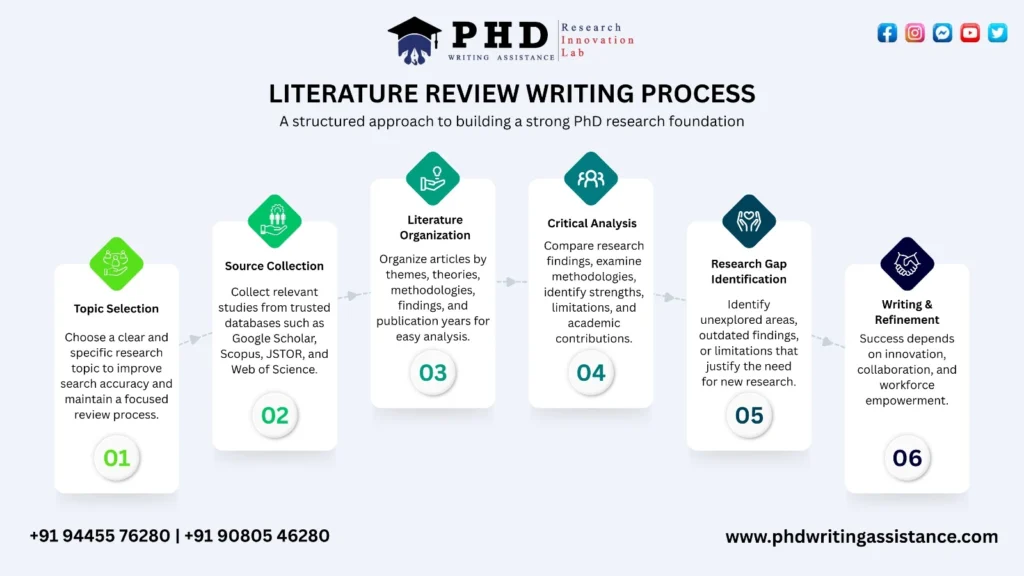
Following a structured Step by step literature review process helps researchers organize information systematically and improve writing quality.
Step 1: Define Your Research Topic
The first step is selecting a clear and focused research topic. Broad topics can make literature reviews difficult to manage, while focused topics allow researchers to identify relevant studies more effectively.
For example:
- Broad topic: Digital marketing
- Focused topic: Impact of AI-driven personalization on consumer engagement in e-commerce
A focused topic improves search accuracy and research quality.
Step 2: Search for Academic Sources
The next step in this Literature review writing guide involves collecting scholarly sources from reliable databases.
Common academic databases include:
- Google Scholar
- Scopus
- JSTOR
- PubMed
- Web of Science
Researchers should prioritize:
- peer-reviewed journals
- scholarly books
- conference papers
- reputable academic publications
Using proper keywords while searching improves the relevance of academic sources.
Step 3: Organize the Literature
After collecting articles, organize them systematically based on:
- themes
- theories
- methodologies
- publication years
- findings
Reference management tools such as:
- Mendeley
- Zotero
- EndNote
can help researchers manage citations and academic references effectively.
This stage is essential in learning How to write a literature review efficiently.
Step 4: Critically Analyze the Studies
Critical analysis is one of the most important aspects of a literature review. Researchers should not simply summarize articles but evaluate them carefully.
Key areas to analyze include:
- strengths and weaknesses
- research methods
- theoretical frameworks
- findings and conclusions
- limitations of the study
For example:
Instead of writing:
“Study A discussed employee motivation.”
Write:
“Study A demonstrated a positive relationship between leadership style and employee motivation; however, the research focused only on large organizations, limiting its generalizability.”
Critical analysis strengthens academic quality and demonstrates research expertise.
Step 5: Identify Research Gaps
Research gaps represent areas that previous studies have not adequately explored. Identifying these gaps is essential because they justify your research contribution.
Examples of research gaps:
- outdated research findings
- limited geographic focus
- insufficient sample size
- unexplored variables
- lack of comparative analysis
A strong Sample of literature review usually includes a clearly defined research gap section.
Step 6: Create a Literature Review Structure
Organizing the literature review logically improves readability and academic flow.
Common structures include:
Chronological Structure
Organizes studies based on publication years.
Thematic Structure
Groups studies according to themes or concepts.
Methodological Structure
Compares research methods used in previous studies.
Theoretical Structure
Focuses on theories and conceptual frameworks.
Selecting the right structure depends on the research topic and academic discipline.
Step 7: Write and Revise the Literature Review
Once the structure is finalized, begin writing the first draft. Focus on maintaining:
- logical flow
- critical analysis
- academic tone
- proper citations
After writing, revise multiple times to improve:
- clarity
- grammar
- coherence
- readability
Editing is a critical part of How to do a lit review successfully.
Common Structure of a Literature Review
A professional literature review generally contains the following sections:
Introduction
Introduces the topic, research objectives, and review scope.
Theoretical Background
Explains theories and conceptual frameworks related to the topic.
Review of Existing Research
Analyzes previous studies and compares findings.
Research Gap
Identifies limitations or unexplored areas in existing research.
Conclusion
Summarizes key findings and connects them to the current research study.
Using this structure improves organization and helps readers follow the academic discussion easily.
How to Write a Literature Review Effectively
Many PhD scholars struggle with How to write a literature review that meets university standards. The following strategies can improve literature review quality significantly.
Focus on Critical Thinking
A literature review should evaluate research rather than simply describe it. Compare findings, discuss contradictions, and analyze methodologies critically.
Use Reliable Academic Sources
Avoid using low-quality or unreliable websites. Prioritize peer-reviewed journals and scholarly publications.
Maintain Academic Flow
Transitions between paragraphs and sections should feel natural and connected.
Use Proper Citation Styles
Follow your university’s required referencing style, such as:
- APA
- Harvard
- MLA
- Chicago
Avoid Plagiarism
Always paraphrase carefully and provide accurate citations for every source used.
Sample of Literature Review Writing Style
A professional Sample of literature review includes critical discussion rather than descriptive summaries.
Example:
Previous studies have explored the relationship between employee engagement and leadership styles. However, most studies focused on traditional office environments, while limited research has examined hybrid work models. This research aims to address this gap by analyzing employee engagement strategies in remote and hybrid workplaces.
This approach demonstrates analytical thinking and highlights research originality.
Common Mistakes in Literature Review Writing
Understanding common mistakes can help researchers improve the quality of their work.
Lack of Critical Analysis
Simply summarizing studies weakens academic depth.
Poor Organization
Unstructured content reduces readability and logical flow.
Outdated References
Using old studies may reduce research relevance.
Weak Research Gap
Failure to identify clear research gaps weakens originality.
Citation Errors
Incorrect referencing affects academic credibility and may result in plagiarism concerns.
Avoiding these mistakes strengthens overall dissertation quality.
Best Tools for Literature Review Writing
Several academic tools can simplify literature review writing for PhD students.
Reference Management Tools
- Zotero
- Mendeley
- EndNote
Grammar and Editing Tools
- Grammarly
- QuillBot
Research Discovery Tools
- Google Scholar
- Connected Papers
- ResearchGate
These tools improve organization, citation management, and writing quality.
Tips to Improve Literature Review Quality
Researchers can strengthen their literature review by following these expert strategies:
- Read journal articles regularly
- Take organized research notes
- Focus on thematic analysis
- Write consistently
- Revise multiple drafts
- Seek supervisor feedback
Strong literature reviews require continuous refinement and critical thinking.
Conclusion
A literature review is one of the most important components of a PhD thesis or dissertation. It demonstrates subject expertise, analytical thinking, and the ability to engage critically with scholarly research. This detailed Literature review writing guide helps researchers understand How to write a literature review effectively while following a structured and professional academic approach.
By following a proper Step by step literature review process, researchers can identify meaningful research gaps, analyze previous studies critically, and build a strong academic foundation for their research. Understanding How to do a lit review correctly improves research quality, strengthens academic credibility, and increases the overall impact of the dissertation.
Using a professional structure, reliable academic sources, and critical analysis techniques will help PhD scholars create literature reviews that contribute valuable insights to their field of study.
Frequently Asked Questions
1. How do I start writing a literature review for my PhD?
Start by choosing a focused research topic, collecting academic sources, and organizing studies by themes or concepts. Following a proper Literature review writing guide helps create a strong research foundation.
2. What is the correct structure of a PhD literature review?
A PhD literature review usually includes an introduction, theoretical background, analysis of previous studies, research gaps, and a conclusion. A clear Step by step literature review structure improves readability and research quality.
3. How many studies should be included in a PhD literature review?
There is no fixed number, but researchers should include enough recent and relevant studies to demonstrate strong subject knowledge and academic depth.
4. What are common literature review mistakes PhD students make?
Common mistakes include poor structure, lack of critical analysis, outdated references, plagiarism, and failing to identify research gaps.
5. How do I critically analyze sources in a literature review?
Critical analysis involves comparing findings, evaluating research methods, identifying limitations, and explaining how each study contributes to the research topic.