Introduction
A well-written research proposal is often the deciding factor between acceptance and rejection in a PhD application. Universities are not simply evaluating a research topic; they are assessing whether the applicant has the academic ability, critical thinking skills, and research vision required to complete a doctoral programme successfully. This is why understanding the correct PhD proposal writing guide is essential for every research scholar.
Many students struggle because they focus only on presenting an interesting topic rather than demonstrating a clear research direction and academic value. An effective proposal should explain what you plan to research, why the topic matters, how the research will be conducted, and what contribution it will make to the existing body of knowledge.
This guide explains the complete process of preparing a successful proposal, including the ideal PhD proposal format, practical strategies on how to write research proposal for PhD admission, and expert insights that can improve your chances of approval. For students reviewing a sample of PhD research proposal, this article also highlights what supervisors and universities genuinely expect from doctoral-level research proposals.
Why a Strong Research Proposal Matters
A research proposal serves as the foundation of your PhD journey. It reflects your ability to:
- identify a meaningful research problem
- analyse existing academic literature
- develop realistic research objectives
- apply appropriate research methodologies
- communicate ideas academically
Admissions committees and supervisors review hundreds of proposals each year. Most rejected proposals fail not because the topic is weak, but because the proposal lacks structure, clarity, originality, or methodological depth.
An approved proposal demonstrates academic maturity and shows that the applicant understands the complexity of doctoral-level research.
Choosing the Right Research Topic
One of the most important stages in the PhD proposal writing guide process is selecting a research topic that is both academically relevant and practically manageable.
A strong topic should:
- address a clear research gap
- align with current academic discussions
- contribute original insights
- remain focused and achievable within the PhD timeline
Many students make the mistake of choosing topics that are too broad. Broad research areas often lead to unclear objectives and weak methodologies. Instead, narrow the topic into a specific issue that can be explored critically and systematically.
Before finalising your topic, review recent journal articles, conference papers, and doctoral studies to understand current debates within your field. This preliminary literature review will help identify areas that require further investigation.
Understanding the Correct PhD Proposal Format
Following the correct PhD proposal format is essential because universities expect research proposals to follow a professional academic structure. Although requirements vary slightly across institutions, most successful proposals include the following sections.
Title
The research title should clearly explain the central focus of the study. Avoid vague or overly complicated wording. A strong title immediately communicates the research area and objective.
Example:
“Artificial Intelligence Adoption in Healthcare Decision-Making: Challenges and Strategic Opportunities”
Introduction
The introduction establishes the background of the research topic and explains why the study is important. This section should:
- introduce the broader research area
- identify the research problem
- explain the significance of the study
- provide context using recent academic evidence
A strong introduction creates immediate academic relevance and demonstrates subject knowledge.
Research Problem
The research problem is the core issue your study intends to address. Universities expect doctoral research to solve a gap, challenge, or unresolved question within an academic discipline.
Clearly defining the research problem strengthens the overall direction of the proposal and improves research clarity.
Research Objectives and Questions
Your objectives explain what the research intends to achieve. Strong objectives should be:
- specific
- measurable
- realistic
- academically relevant
Research questions should directly connect to the objectives and guide the entire study.
Literature Review
The literature review demonstrates your understanding of existing academic research. Instead of simply summarising studies, critically analyse:
- existing findings
- methodological limitations
- research gaps
- conflicting perspectives
A high-quality literature review positions your research within current academic discussions and justifies the need for your study.Students searching for a sample of PhD research proposal often overlook the importance of critical evaluation within this section. Supervisors expect analysis, not just description.
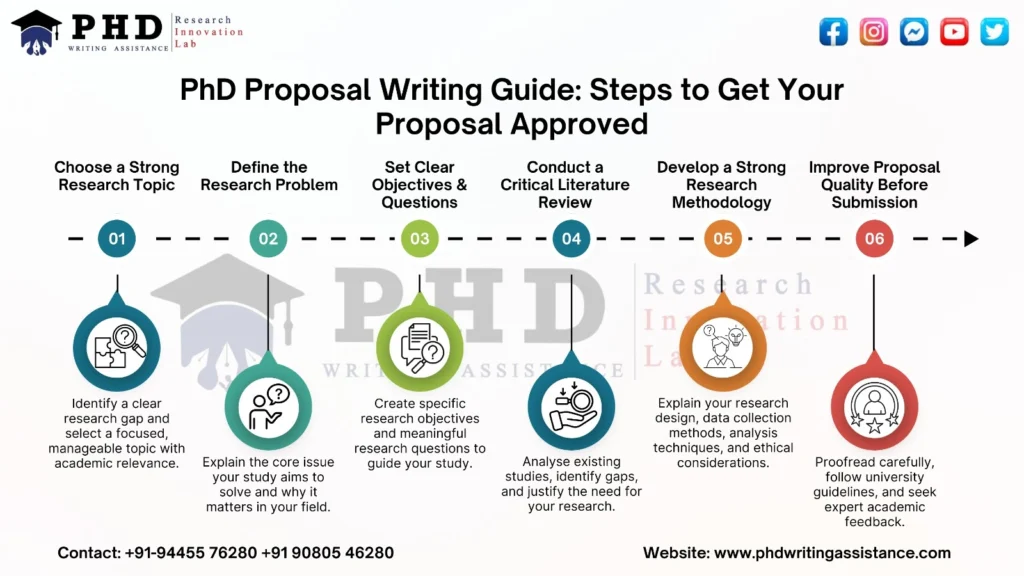
How to Write Research Proposal for PhD Applications Successfully
Understanding how to write research proposal for PhD programmes requires more than technical formatting. Expert-level proposals demonstrate clarity, originality, and strategic academic thinking.
Develop a Clear Research Focus
Every section of the proposal should connect logically to the main research problem. Avoid introducing unrelated concepts or unnecessary theoretical discussions.
Use Academic Evidence Strategically
Support your claims with credible academic sources, peer-reviewed journals, and recent research findings. Strong referencing improves academic reliability and demonstrates research awareness.
Demonstrate Originality
PhD-level research must contribute something new to the field. Your proposal should clearly explain:
- what gap exists
- why the gap matters
- how your study will address it
Even small contributions can be valuable when presented clearly and supported academically.
Keep the Writing Professional
Use formal academic language while maintaining clarity and readability. Avoid repetitive wording, vague statements, and excessive technical jargon.
Research Methodology: A Critical Section
The methodology section often determines whether a proposal appears practical and achievable.
This section should explain:
- research design
- qualitative or quantitative approach
- data collection methods
- sampling strategy
- data analysis techniques
- ethical considerations
Your methodology must align directly with your research objectives and questions.
For example:
- interviews and thematic analysis may suit qualitative studies
- surveys and statistical analysis may suit quantitative research
A weak methodology creates doubts about the feasibility of the research project.
Common Reasons Why Research Proposals Get Rejected
Many PhD proposals are rejected due to avoidable academic mistakes.
Lack of Clarity
Unclear research aims and poorly structured arguments weaken the proposal significantly.
Weak Literature Review
A proposal without strong academic engagement suggests insufficient subject knowledge.
Unrealistic Scope
Research projects that appear too broad or impractical often raise concerns for supervisors.
Poor Formatting and Referencing
Ignoring university guidelines or inconsistent citation styles can affect credibility.
Limited Originality
Doctoral research should contribute fresh insights rather than repeating existing studies.
Understanding these issues is an important part of mastering the PhD proposal writing guide process.
Importance of Reviewing a Sample of PhD Research Proposal
Reviewing a sample of PhD research proposal can help students understand:
- proposal structure
- academic tone
- methodology presentation
- literature review organisation
However, examples should only be used for guidance. Universities expect originality, independent analysis, and personalised research direction.
Copying proposal templates without adapting them to your own research focus can weaken the quality and authenticity of the document.
Expert Tips for Getting Your Proposal Approved
Align Your Research with Supervisor Interests
Supervisors are more likely to support projects connected to their academic expertise.
Focus on Research Feasibility
Demonstrate that the project can realistically be completed within the doctoral timeframe and available resources.
Maintain Logical Flow
Every section should connect naturally and support the overall research purpose.
Edit and Proofread Carefully
Grammar mistakes, inconsistent formatting, and unclear explanations reduce professionalism.
Seek Academic Feedback
Receiving expert feedback before submission can strengthen weak arguments and improve overall structure.
Conclusion
A successful PhD proposal combines originality, academic structure, critical analysis, and methodological clarity. Universities are not only evaluating the topic itself but also assessing whether the applicant has the research capability to complete doctoral-level work successfully.
By following the correct PhD proposal format, understanding how to write research proposal for PhD applications effectively, and learning from a sample of PhD research proposal, students can develop stronger, more persuasive proposals that meet academic expectations.
This comprehensive PhD proposal writing guide highlights the importance of research planning, academic precision, and strategic writing in securing proposal approval and beginning a successful doctoral research journey.
Frequently Asked Questions
1. How do I write a research proposal that gets approved quickly?
To improve approval chances, focus on a clear research problem, strong academic structure, relevant literature review, and a realistic research methodology. Following university guidelines carefully is also essential.
2. What are the most common mistakes in PhD research proposals?
Common mistakes include unclear research objectives, weak literature reviews, poor methodology explanations, broad topics, and formatting errors.
3. How long should a PhD research proposal be?
The length varies depending on university requirements, but most PhD research proposals range between 1,500 and 3,000 words.
4. What do supervisors look for in a research proposal?
Supervisors evaluate originality, research relevance, methodology, feasibility, and the applicant’s understanding of the subject area.
5. Can a research proposal be revised after submission?
In many cases, universities may allow revisions after feedback from supervisors or review committees. Minor changes during the research process are also common.