Introduction
Diabetes management is a complex and ongoing process that requires effective strategies to control blood glucose levels, reduce complications, and support quality of life. Diabetes mellitus is a chronic metabolic disorder affecting millions of people worldwide, making effective diabetes care an important area of medical research.
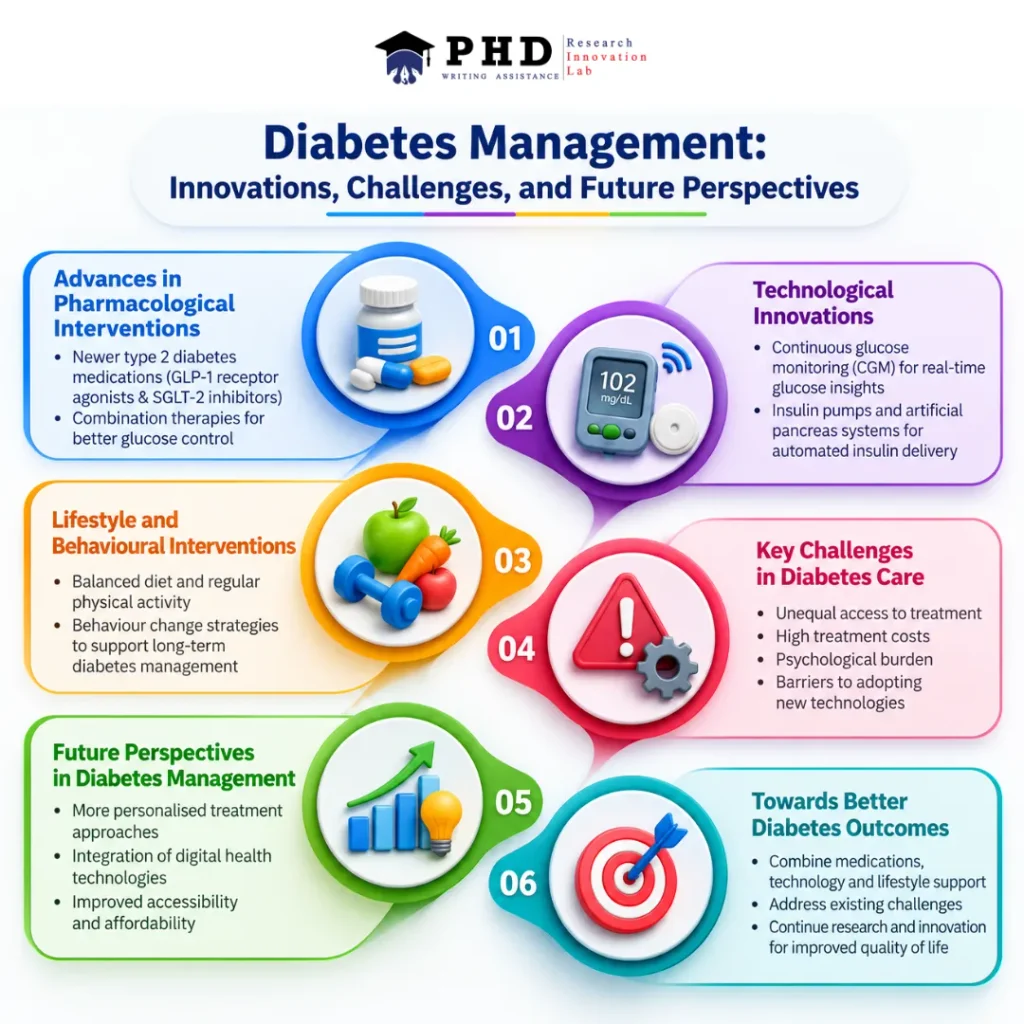
Over recent decades, advances in diabetes treatment have expanded beyond conventional approaches to include newer medications, continuous glucose monitoring, automated insulin delivery, lifestyle interventions, and personalised approaches. However, challenges remain, including unequal access to care, treatment affordability, psychological burden, and the implementation of emerging technologies.
A critical review of the literature is therefore important for understanding how current approaches are changing diabetes management. This article examines developments in pharmacological interventions, technological innovations, lifestyle and behavioural approaches, continuing challenges, and future research directions in diabetes care.
Advances in Pharmacological Interventions for Diabetes Management
Pharmacological interventions remain a major component of diabetes management, particularly for people with Type 2 diabetes. Research into newer medication classes has focused not only on improving blood glucose control but also on addressing associated health risks and broader patient outcomes.
Type 2 Diabetes Medications: GLP-1 Receptor Agonists and SGLT-2 Inhibitors
Newer type 2 diabetes medications, particularly GLP-1 receptor agonists and SGLT-2 inhibitors, have become important areas of research. These medication classes can support blood glucose control while also providing additional benefits related to body weight and cardiovascular risk.
Palmer et al. (2021) reviewed SGLT-2 inhibitors and GLP-1 receptor agonists for Type 2 diabetes and reported clinically relevant benefits associated with these treatment approaches. Research into SGLT-2 inhibitors has also highlighted their potential role in reducing cardiovascular risk among people with diabetes and existing cardiovascular disease.
These developments show how modern diabetes treatment increasingly considers outcomes beyond glycaemic control. Medication selection may involve factors such as cardiovascular risk, weight, hypoglycaemia, tolerability, and individual patient requirements.
Combination Therapies
Combination therapy is another important area within diabetes management. Using different medication classes may provide complementary effects and support improved glycaemic control for some patients.
Research involving metformin in combination with SGLT-2 inhibitors has reported improvements in glycaemic control and reductions in some adverse outcomes. However, treatment decisions need to consider individual patient characteristics, treatment goals, tolerability, and other clinical factors.
The growing range of type 2 diabetes medications highlights the importance of considering individual needs rather than relying on a single treatment approach.
Technological Innovations in Diabetes Management
Technology is increasingly influencing diabetes management by improving glucose monitoring, insulin delivery, and the collection and analysis of health data. These developments provide patients and healthcare professionals with additional information to support treatment and self-management decisions.
Continuous Glucose Monitoring
Continuous glucose monitoring (CGM) systems provide ongoing information about glucose levels and help patients identify changes and patterns that may not be visible through occasional measurements.
CGM can support informed decisions about diet, physical activity, and insulin administration. Research has also examined its relationship with HbA1c levels and hypoglycaemia, particularly among people with Type 2 diabetes.
Beyond monitoring, CGM generates valuable health data that can contribute to research into glucose patterns and more personalised approaches to diabetes care.
Insulin Pumps and Artificial Pancreas Systems
Insulin pumps and closed-loop systems represent another significant development in diabetes technology. Often referred to as artificial pancreas systems, these technologies can use continuous glucose information to support automated insulin delivery.
The International Diabetes Closed-Loop (iDCL) Trial demonstrated the potential of closed-loop systems to improve glucose stability while reducing some of the daily burden associated with diabetes management.
Modern automated insulin delivery systems combine glucose monitoring with algorithms that help regulate insulin delivery. However, effective implementation also depends on appropriate education, training, resources, and ongoing support.
Lifestyle and Behavioural Interventions
Although pharmacological and technological developments continue to expand, lifestyle and behavioural interventions remain fundamental to diabetes management. Dietary habits, physical activity, and weight management are particularly important for preventing Type 2 diabetes and supporting people living with the condition.
Dietary Approaches
Several dietary approaches have been studied for their potential effects on glycaemic control and weight management. Low-carbohydrate, Mediterranean, and plant-based diets have all received attention in diabetes research.
Martín-Peláez et al. (2020) reviewed the effects of the Mediterranean diet on Type 2 diabetes prevention and disease progression, highlighting its relationship with HbA1c and insulin sensitivity.
However, maintaining dietary changes can be challenging. Socio-economic conditions, food accessibility, cultural factors, and individual preferences can influence dietary adherence. Effective diabetes management therefore needs to consider the practical circumstances affecting a person’s ability to maintain recommended dietary changes.
Physical Activity and Weight Management
Physical activity is another important component of diabetes management. Both aerobic and resistance exercise have been associated with improvements in insulin sensitivity and glycaemic control.
Weight management is also relevant to diabetes prevention and management. Programmes such as the Diabetes Prevention Program have demonstrated the potential benefits of sustained lifestyle changes in reducing diabetes incidence among populations at increased risk.
These findings demonstrate that effective diabetes treatment should not be considered solely in terms of medication. Lifestyle interventions can form an important part of an integrated approach to long-term diabetes care.
Challenges in Diabetes Management
Despite substantial advances, several barriers continue to affect effective diabetes management. These challenges can influence whether patients are able to access, adopt, and maintain appropriate treatment and self-care strategies.
Access to Diabetes Care
Access to diabetes care varies across populations and healthcare systems. People in low- and middle-income settings may experience difficulties accessing essential medications, glucose-monitoring equipment, specialist services, and other healthcare resources.
Socio-economic and geographical factors can influence the availability and quality of diabetes treatment. Advances in medication and technology may have limited impact if patients cannot access the resources required to use them effectively.
Reducing disparities in access to diabetes care therefore remains an important consideration for future research and healthcare planning.
Psychological and Social Barriers
Diabetes requires continuous self-management, which can create a substantial psychological and emotional burden. Fear of hypoglycaemia, treatment demands, and diabetes-related stigma may affect self-care and adherence.
Psychological interventions and social support can form an important part of comprehensive diabetes care. However, these forms of support may remain underused because of limited awareness, accessibility, or availability.
A patient-centred approach to diabetes management should therefore consider psychological and social needs alongside clinical treatment.
Healthcare Provider Training
The continued development of new medications and technologies creates a need for healthcare professionals to remain informed about changing treatment approaches.
Effective use of newer pharmacological and technological tools requires appropriate knowledge, training, and ongoing professional development. Strengthening continuous education can support the effective implementation of new approaches and contribute to improved diabetes care.
Future Perspectives in Diabetes Management
The future of diabetes management is increasingly associated with emerging areas such as gene therapy, regenerative medicine, artificial intelligence, and personalised medicine.
Gene Therapy and Regenerative Medicine
Research into gene therapy and regenerative medicine aims to explore approaches that may address underlying mechanisms of diabetes rather than focusing only on managing blood glucose levels.
Early-stage research has investigated gene-editing technologies such as CRISPR and their potential applications in insulin production. These approaches remain areas of ongoing research, and further investigation is required to establish their long-term effectiveness, safety, and clinical applications.
Artificial Intelligence in Diabetes Care
Artificial intelligence is becoming an important area of diabetes research. AI systems can analyse large datasets generated by continuous glucose monitoring devices, electronic health records, wearable technologies, and other digital health tools.
By identifying patterns within these datasets, AI-based approaches may help predict glucose fluctuations and generate personalised insights for diabetes self-management. The increasing availability of health data creates opportunities to investigate how artificial intelligence can support more responsive approaches to diabetes care.
Personalised Diabetes Management
Personalised medicine represents a shift towards treatment approaches that consider individual patient characteristics rather than applying the same strategy to every person.
Personalised diabetes management may take into account genetics, lifestyle factors, existing health conditions, treatment requirements, and individual preferences. As research develops, this approach may provide opportunities to better match diabetes treatment with the specific needs of individual patients.
Medical Research Writing and Literature Review Assistance
The continued development of diabetes treatment depends on high-quality medical research and critical evaluation of existing evidence. Researchers working in diabetes and related healthcare fields often need to analyse scientific literature, compare findings across studies, evaluate research methods, and identify areas requiring further investigation.
Medical research writing requires evidence to be presented clearly, logically, and accurately. A well-developed literature review should synthesise findings from relevant studies rather than simply describing individual publications. It should also distinguish established findings from emerging research and identify important gaps in the existing literature.
Literature review assistance can support researchers in organising relevant studies, developing a coherent review structure, improving academic writing, and presenting evidence appropriately. This can be particularly useful when a research topic involves multiple treatment approaches, technologies, behavioural interventions, and emerging research directions.
Conclusion
Diabetes management has developed considerably through advances in pharmacological treatment, technology, lifestyle interventions, and personalised approaches. Newer type 2 diabetes medications, continuous glucose monitoring, insulin pumps, and artificial pancreas systems have expanded the approaches available for supporting glycaemic control and diabetes care.
However, significant challenges remain, including unequal access to healthcare, affordability, psychological barriers, treatment burden, and gaps in healthcare provider training. Addressing these challenges is essential to ensure that advances in diabetes treatment can be implemented effectively.
Future research will continue to explore gene therapy, regenerative medicine, artificial intelligence, and personalised medicine. The development and implementation of these approaches will require continued research, appropriate healthcare infrastructure, professional training, and attention to disparities in access to care.
An integrated and patient-centred approach will remain essential as researchers and healthcare professionals continue to explore new ways of improving diabetes management and long-term outcomes.
References:
Yedjou, C. G., Grigsby, J., Mbemi, A., Nelson, D., Mildort, B., Latinwo, L., & Tchounwou, P. B. (2023). The management of diabetes mellitus using medicinal plants and vitamins. International Journal of Molecular Sciences, 24(10), 9085. https://doi.org/10.3390/ijms24109085 (Diabetes mellitus, blood glucose levels)
Williams, R., Karuranga, S., Malanda, B., Saeedi, P., Basit, A., Besançon, S., … & Colagiuri, S. (2020). Global and regional estimates and projections of diabetes-related health expenditure: Results from the International Diabetes Federation Diabetes Atlas. Diabetes research and clinical practice, 162, 108072. https://doi.org/10.1016/j.diabres.2020.108072 (diabetes management)
Palmer, S. C., Tendal, B., Mustafa, R. A., Vandvik, P. O., Li, S., Hao, Q., … & Strippoli, G. F. (2021). Sodium-glucose cotransporter protein-2 (SGLT-2) inhibitors and glucagon-like peptide-1 (GLP-1) receptor agonists for type 2 diabetes: systematic review and network meta-analysis of randomised controlled trials. Bmj, 372. https://doi.org/10.1136/bmj.m4573 (SGLT-2 inhibitors, cardiovascular risk reduction).
Li, S., Vandvik, P. O., Lytvyn, L., Guyatt, G. H., Palmer, S. C., Rodriguez-Gutierrez, R., … & Mustafa, R. A. (2021). SGLT-2 inhibitors or GLP-1 receptor agonists for adults with type 2 diabetes: a clinical practice guideline. bmj, 373. https://doi.org/10.1136/bmj.n1091 (glycemic control).
Ooi, S. W., Yeh, S. T., Chang, Y. H., Li, C. Y., & Chen, H. F. (2023). Different levels of hypoglycemia in patients with type 2 diabetes, their achieved mean HbA1c vs. all-cause and cardiovascular mortality. PloS one, 18(7), e0288360. https://doi.org/10.1371/journal.pone.0288360 (hemoglobin A1C levels, Hypoglycaemia)
Martín-Peláez, S., Fito, M., & Castaner, O. (2020). Mediterranean diet effects on type 2 diabetes prevention, disease progression, and related mechanisms. A review. Nutrients, 12(8), 2236. https://doi.org/10.3390/nu12082236 (insulin, dietary adherence)
Schutte, A. E., Jafar, T. H., Poulter, N. R., Damasceno, A., Khan, N. A., Nilsson, P. M., … & Tomaszewski, M. (2023). Addressing global disparities in blood pressure control: perspectives of the International Society of Hypertension. Cardiovascular research, 119(2), 381-409. https://doi.org/10.1093/cvr/cvac130 (global disparity in diabetes treatment)
Arda Sürücü, H., Baran Durmaz, G., & Turan, E. (2020). Does type 1 diabetic adolescents’ fear of stigmatization predict a negative perception insulin treatment?. Clinical nursing research, 29(4), 235-242. https://doi.org/10.1177/1054773818815258 (hypoglycaemia, diabetes-related stigma)
Frequently Asked Questions
1. What is diabetes management?
Diabetes management involves using medication, lifestyle changes, glucose monitoring, and other appropriate approaches to control blood glucose levels, reduce complications, and support long-term health.
2. What are the latest approaches to diabetes management?
Recent approaches include newer Type 2 diabetes medications, continuous glucose monitoring, insulin pumps, artificial pancreas systems, lifestyle interventions, artificial intelligence, and personalised medicine.
3. What are the main challenges in diabetes management?
Key challenges include limited access to healthcare, treatment affordability, psychological and social barriers, diabetes-related stigma, and gaps in healthcare provider training.
4. How does technology support diabetes management?
Technologies such as continuous glucose monitoring, insulin pumps, artificial pancreas systems, and AI-based tools can provide health data, support insulin delivery, identify patterns, and contribute to more personalised diabetes care.
5. What is the future of diabetes management?
Future research is exploring gene therapy, regenerative medicine, artificial intelligence, and personalised medicine, with the aim of developing more individualised approaches to diabetes care.